sexta-feira, 29 de setembro de 2017

8 Advanced Facebook Marketing Strategies for Serious Pros


You have to experiment if you want to take your Facebook page to the next level.
Following all the Facebook best practices just won't cut it.
Instead of copying everyone else, here are 8 ways to buck conventional norms & really get important data for your Facebook marketing strategy.
If you're new to Facebook marketing, don't worry -- this advice is easy to follow.
But these tips will work wonders for the most seasoned social media marketer too.

8 Advanced Facebook Marketing Strategies for Serious Pros

1. Segment Time for Different Content

The trick here is to post different types of content throughout the day.
Then take note of what works at what time.
For example, post a news link in the morning so your fans can catch up on what’s happening in the world.
Then publish something more light-hearted in the afternoon -- like a meme, fun question or a quote.
Then do the reverse the next day & compare the results.

2. Experiment With New Content

Do you post enough variety on your Facebook page?
Would you like to test some new content but don't know where to begin?
Post Planner's new viral photo finder can help. The tool quickly locates the most popular & shared photos on any Facebook page.
I used the viral photo finder to find this post:

The trick here is to try posting stuff you've never tried before -- maybe stuff you've never even thought to try before.
See how it works. Gauge the reaction & then try something new.
Think of each post as an experiment! And let Facebook tally the results.

3. Post the Right Content on the Weekend

Maybe people don't want to read your blog posts on the weekend.
At least that's what recent research from BuzzSumo says.
So try posting other stuff.
Instead of posting articles, mix it up on the weekend with more engaging posts like questions, quotes & photos.
But again -- treat these posts as scientific experiments.

   12 Secret Facebook Features Every Marketer Should Be Using       

4. Post at Different Times of Day

So many social media experts think they know the #1 best time to post.
Guess what?
They don't.
That's because it's different for every page & fanbase.
The only way to find out is to run experiments.
Ie. try posting at off-peak hours when there isn't as much competition for eyeballs.
It worked for one of my Facebook pages.
We got strong engagement on content we posted after 10pm.

5. Test Post Frequency

You’ve also heard lots of advice about how many times you should post each day.
Just remember, there isn't a one-size-fits-all solution for every page. The only way to find out what works best on your page is to experiment.
We post 6-8 times a day at Post Planner!
So it all depends on how engaged your fans are with your content.
Here's a recent post from Post Planner that got more than 4,000 shares:

Guess what?
The posts that we posted 2 hours before & 2 hours after this post also got huge engagement.
So don't believe the hype when experts tell you to post only twice per day!
Test it out for yourself!

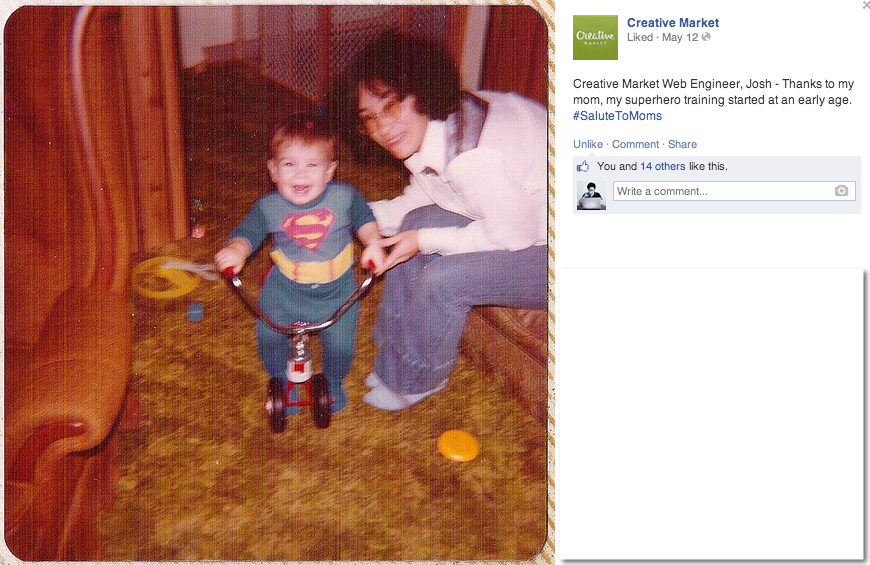
6. Be Personal

The Facebook pages I remember best are ones that engage with me on a personal level.
They showcase the personal side of their business.
Try communicating with your Facebook fans on a personal level. Discuss a new product launch by showing your team working hard behind the scenes.
Facebook is a social network, so be social.
Here's a great Mother's Day example from Creative Market:
advanced-facebook-marketing-strategies

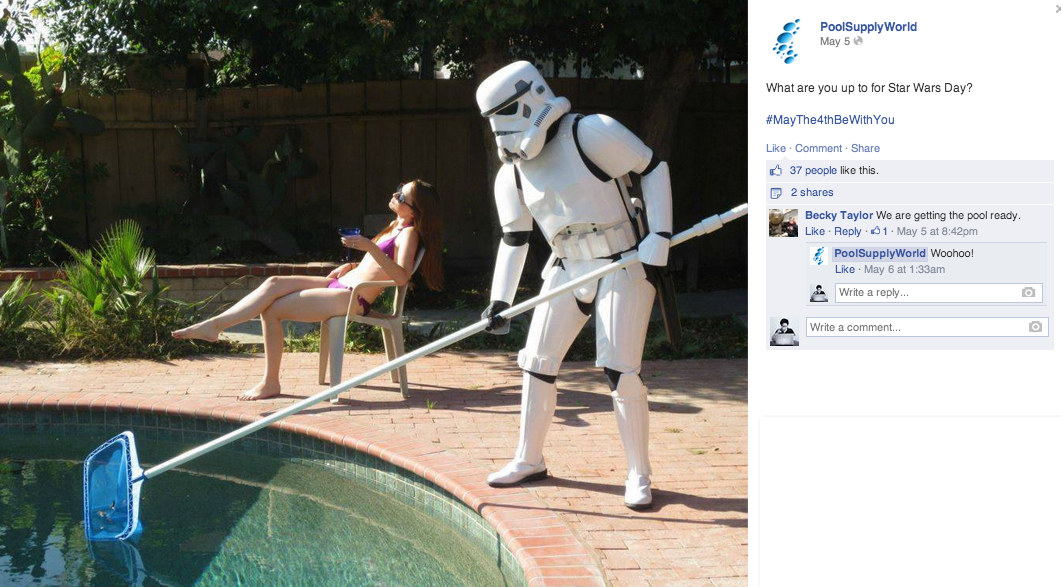
7. Highlight Current Events

Are there events in the news that may interest your fans?
If so, you can craft your posts around those events.
For example, if a big game is coming up & your page focuses on recipes, share recipe ideas before the game.
If you run a fashion page, ask for opinions from your fans about what celebrities wore to a newsworthy event like the Academy Awards.
The possibilities are endless.
Pool Supply World posted this on Star Wars Day:
advanced-facebook-marketing-strategies

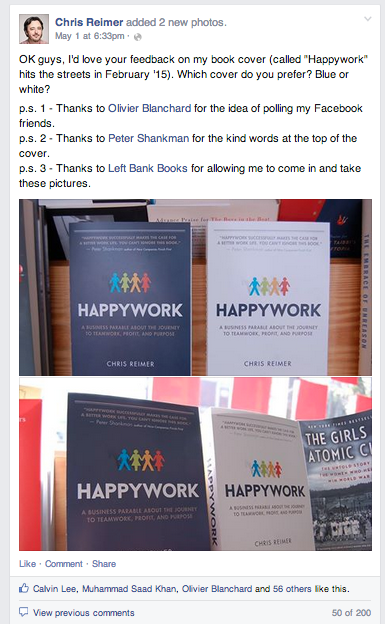
8. Crowdsource Decisions

Are you launching a new product or service soon?
Why not let your fans weigh in with their feedback?
Let them help you make decisions like:
  • picking a new book cover
  • deciding on a title or headline
  • choosing a new logo
This is a great way to get fans to engage with your page.
Check out how my friend Chris Reimer crowdsourced his book cover:
advanced-facebook-marketing-strategies

Wrap Up

Use these advanced Facebook marketing strategies to take your page to the next level.
The tricks could help you attract more followers & stay engaged with your fans.
Now it's your turn...
Have you tried these tips? Is there any advice you'd like to add?

5 Advanced Social Media Marketing Strategies for Small Businesses


Samir Balwani is an emerging technology strategist at Morpheus Media, a firm specializing in Social Marketing, SEM, and SEO. You can follow him on Twitter @samirbalwani and get his newsletter.
Social media marketing and the businesses that utilize it have become more sophisticated. More small businesses are beginning to understand how to best leverage online tools to build a community and recognize that engagement and interaction are the foundations of social marketing, but most don't know what's next.
What follows are five advanced strategies for small businesses that may already have small online communities and understand how to create an online presence, but don't know what to do next.

What Is An Advanced Strategy?

The definition of an advanced social strategy is a technique that goes beyond the normal social media presence. It introduces or reinforces a marketing message while pushing a user to another profile or business site. Before moving forward with an advanced strategy, it's important that your business understands social marketing, has experience engaging consumers, and that you possess a basic understanding of online marketing.

Strategy 1: Multimedia Usage

The term "A picture is worth a thousand words" has never been truer. Consumers are now using the web to look for product pictures and videos; they want more information and want to see what they're considering buying. The good news is that it's easy for a company to create and publish videos and pictures.
In addition to taking photos of products, you can also take pictures at office events as a way to highlight company culture. This not only helps convince others to work with you or to buy from you (consumers see that you are down to earth and one of them, instead of a stuffy company), it also helps your HR department recruit new employees. Who doesn't want to work for a company that celebrates birthdays and has a good time?
Videos are useful for explaining complex how-tos or concepts. Showing step by step directions can have a greater impact than even the most well written article. Businesses don't have to invest huge sums of money to create good videos, either. I highly recommend the relatively cheap Flip camcorder, which takes great videos and is easy for even a non-technical marketer to use.
Multimedia can break down the faceless business-to-consumer sales flow and make your company appear friendlier. Use videos and images to show that your business is fun, you care about your employees, and most importantly, that you care about your customers.
Example: WorldMusicSupply.com
WorldMusicSupply.com, an online retailer of musical instruments and accessories, has used YouTube to build a strong online community. Their channel has built over 7,000 subscribers and has over 260,000 views.
worldmusicsupply

Strategy 2: Integrate Offline and Online Advertising

Many small businesses do some sort of offline advertising, whether it be radio, print, or cable. Social marketing allows a business to extend their offline sales pitch.
Including your Facebook Page or blog URL in offline ads act as social proof, inviting potential consumers to see your community and increase trust in your business. Not only can integrating online and offline advertising help the conversion process, but it can also help build your community. Introducing potential consumers to your social profiles means they may join your community now and buy later.
integrate advertising image

Strategy 3: Message Adaptation

As businesses start to become more sophisticated with social media they are starting to leverage more online platforms. However, most deliver the same message over multiple platforms instead of tailoring communications for each individual site.
Social platforms each have an ecosystem of their own. What might be acceptable on Tumblrmight be considered spam on Facebook. A specific style of writing might spread on Twitter but fail on FriendFeed. Understanding that each site is different and then customizing your message ensures they do well on each respective site.
Not only does customizing messages across sites help the message spread but it keeps users from receiving multiple identical communications. Be sure to maximize your potential by sending a user that follows the business on Twitter and Facebook two different messages, instead of the same thing.
message adaptation image

Strategy 4: Local Social Networks, Beyond Yelp

For a small business, local search can be a big win. Being visible to consumers looking for a business in their area is extremely important. Make sure your site is included in local business directories in order to help ensure that consumers find you when they need you. Sometimes finding that many sites can be difficult, however.
First, make sure you check your competitors. Where are they listed? Check their inbound links to check for business directories you can add yourself to. Also, make sure your business has been added to Google Maps, using the Local Business Center.
Take the time to include all the information you can and update any old news. For many consumers, this will be their first interaction with the business.
Example: Bella Napoli in New York
Bella Napoli is a small pizzeria in New York that has done a great job of making sure they appear in as many local searches as possible.
bellanapoli

Strategy 5: Contests and Discounts

Building a community is only the first part of social marketing. Using that community to drive sales, propagate marketing, or crowdsource operations is the true power of social media. One way to excite the community is to collectively do something to create a contest or offer an exclusive discount (i.e., the contest can create competition between users). Not only does a contest build buzz organically but if contestants need to, for example, publish an article that gets the most comments in order to win, the contest itself becomes viral.
A good social media contest should include some sort of sharing or virality as a requirement for winning.
Discounts are also a great way to connect with your community. By giving exclusive coupons to your social community, you're rewarding and reminding them that you are not only a brand to engage with, but also to buy from.
Example: NetFirms.com
NetFirms.com decided to make it easier to register a domain by allowing people to do it via Twitter. Those who participated or spread the word by tweeting, were also entered into a prize drawing.
netfirms

Conclusion

Creating a basic social media presence is easy enough, getting your community to actually dosomething is more difficult. Taking advantage of these strategies can help you build your community, make your marketing more effective, and incentivize buying.

More business resources from Mashable: